Udutal 우두탈
Relic
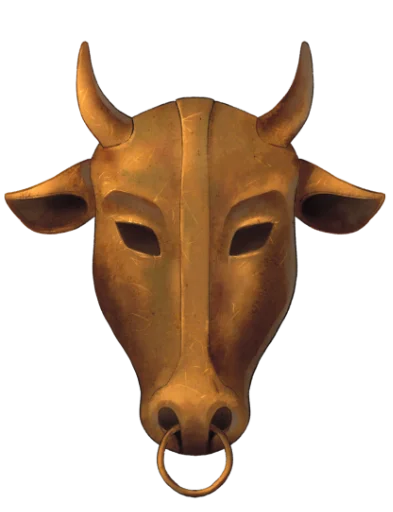
Cow Head Mask
Uduthal (우두탈) falls into the category of samul (사물)—a “magic item” or cursed artifact said to trigger physical transformation. The object itself carries the curse and passes it on to whoever puts it on.
The mask is carved from wood in the shape of a cow’s head. Legend says its power isn’t activated by the mask alone; the wearer must also wrap himself in an actual cowhide. The moment both pieces are in place, the victim becomes—physically, at least—a cow, while the human mind remains fully aware. Speech is lost; only low, plaintive mooing comes out. Any special fittings the mask once had have disappeared, though scholars assume they were crafted in a local shamanic tradition.
To understand the full horror of the Uduthal curse, you have to know what the cow (소) means in Korean culture. Unlike the Western image of the bull as aggressive, the Korean cow is almost sacred, a symbol of loyalty, hard work, motherly care, and rock-solid reliability. On farms it’s viewed as a “work companion” (do-ban, 도반 ) that shares the farmers’ burdens.
That positive symbolism makes the curse doubly tragic. The victim doesn’t just look like an animal; he’s turned into a twisted, monstrous echo of a deeply respected cultural icon. Trapped in a cow’s body, the wearer becomes a sinner in his own private hell—still conscious, yet condemned to toil and suffer. The mask doesn’t simply cause metamorphosis; it creates a living prison where the victim himself is both inmate and warden, and his new body is the instrument of punishment.
From Korean Bestiary 5E, p. 108 · Fern Flower Press